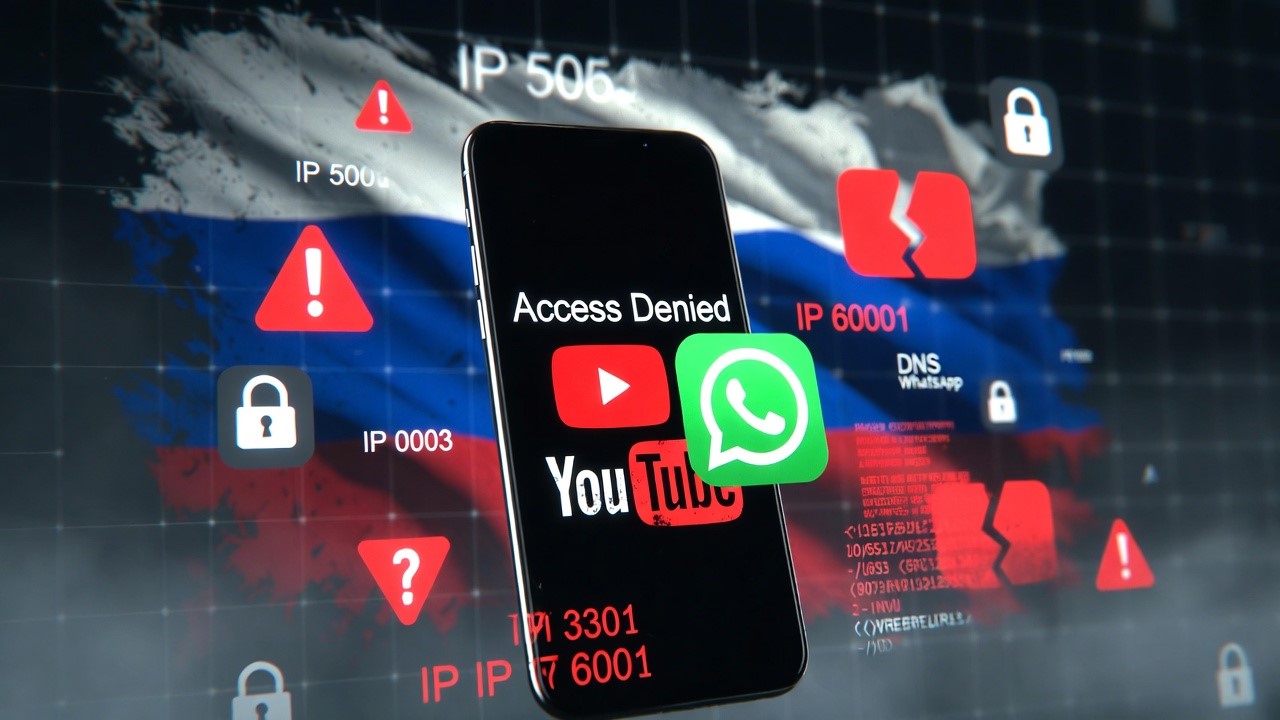
The digital landscape in Russia is undergoing a dramatic transformation. As reports confirm that Russia blocks YouTube and WhatsApp, millions of users are facing increasing difficulties accessing global platforms. More websites and messaging services are becoming inaccessible, raising serious questions about the future of internet freedom inside the country.
At the center of this shift is Roskomnadzor, Russia’s federal internet watchdog. By removing popular platforms like YouTube and WhatsApp from its Domain Name System (DNS), Russian authorities are enforcing one of the strongest forms of online control seen in recent years.
While many users turn to VPNs to bypass these restrictions, others fear that even those tools may soon become unreliable. This article explains how Russia blocks YouTube and WhatsApp, what NDNS means, how VPNs work, and what ordinary users can realistically do in this increasingly controlled digital environment.
How Russia Blocks YouTube and WhatsApp Using DNS Control
The Russian internet regulator has reportedly removed youtube.com from its DNS servers. DNS (Domain Name System) works like the internet’s phone book: it translates website names into numerical IP addresses that computers understand.
When a user in Russia tries to access YouTube without a VPN, their router can no longer resolve the domain name to its IP address. In simple terms, the site “does not exist” from the perspective of the network.
The same approach has been applied to WhatsApp. As a result, Russia blocks YouTube and WhatsApp not by banning devices, but by cutting off the digital pathways required to reach these platforms.
What Is NDNS? Russia’s Alternative Internet Directory
According to internet censorship expert Michael Klimarev, Russia does not simply rely on standard DNS infrastructure. Instead, it operates the National Domain Name System (NDNS).
NDNS was introduced alongside the Sovereign Internet Law, which requires Russian internet service providers to use domestic infrastructure instead of international registrars.
Why NDNS Matters
- Russian authorities can centrally control website access
- ISPs are prohibited from using global DNS systems
- Websites can disappear instantly across the country
Klimarev describes NDNS as an “alternative internet directory” that allows the government to decide what Russian users can and cannot see online.
Websites Removed from Russia’s NDNS
According to reports from Telegram channels monitoring censorship, multiple international media platforms have been removed from NDNS, including:
- DW
- BBC
- Radio Liberty
This demonstrates that the decision to block YouTube and WhatsApp is part of a much broader strategy.
From DPI to DNS Blocking: A Shift in Strategy
Before DNS-based blocking, Roskomnadzor primarily used Deep Packet Inspection (DPI). DPI analyzes internet traffic in real time, allowing authorities to:
- Slow down data transmission
- Throttle video streaming
- Selectively block content
For years, YouTube in Russia was technically accessible but painfully slow. Videos loaded poorly or not at all. This allowed authorities to restrict content without a full ban.
However, experts believe DPI has technical limits. Telecommunications analyst Alexey Uchakin suggested that slowing traffic consumes significant resources, which may have pushed regulators toward full DNS removal instead.
Why Telegram Is Also Under Pressure
The Russian government has also intensified actions against Telegram, a platform widely used by journalists, activists, and independent media.
Authorities claim Telegram violates Russian law and poses a “threat to citizens.” Courts in Moscow have fined the company for refusing to remove what officials describe as “prohibited content.”
Analysts believe Roskomnadzor is targeting platforms it cannot fully control — and that Telegram could face even stricter restrictions in the future.
Life Without a VPN: User Experiences from Inside Russia
Many Russian internet users report that daily online life has become increasingly difficult.
Comments from users include:
- “Nothing works without a VPN.”
- “Even with a VPN, YouTube is unstable and slow.”
- “Free VPNs make things worse.”
In an anonymous survey reviewed by DW:
- 46% said they used YouTube via a VPN
- 24% reported problems even with a VPN
- 3% did not use a VPN and experienced disruptions
These figures show that Russia blocks YouTube and WhatsApp in ways that affect nearly everyone, regardless of technical skill.
VPNs: How They Work and Why They’re Still Used
A Virtual Private Network (VPN) creates an encrypted tunnel between a user’s device and a remote server. This allows users to:
- Bypass geo-blocking
- Hide browsing activity
- Access blocked websites
However, VPNs are not a perfect solution.
Limitations of VPNs in Russia
- Authorities may detect VPN traffic
- Some VPN providers restrict traffic
- Free VPNs are slow and unreliable
- Alternative DNS services may also be blocked
Klimarev warns that even third-party DNS services offer no guarantee of access if authorities decide to block them.
Legal Risks of Using VPNs in Russia
In 2024, Russia introduced a law imposing fines of up to 5,000 rubles for searching “extremist material” and for using VPNs under certain conditions.
Although YouTube has not been officially declared an “undesirable organization,” authorities frequently accuse it of spreading prohibited content. This legal ambiguity creates fear and uncertainty among users.
The Risk of Fake Websites and Cybercrime
Another serious danger arises when authorities manipulate IP addresses. Klimarev warns that users could be redirected to fake websites designed to steal:
- Login credentials
- Bank details
- Personal data
In such an environment, even technically skilled users face heightened cybersecurity risks.
What Can Ordinary Internet Users Do?
Experts agree that options are limited.
Practical Recommendations
- Use reputable, paid VPN services
- Enable HTTPS and security checks
- Avoid entering sensitive data on unfamiliar sites
- Follow trusted digital security guides
However, even these measures may not work indefinitely.
As the na_sviazi Telegram channel notes, if NDNS is the only available system, restoring normal DNS functionality may be impossible without external tools.
A Separate Internet for Russia?
Klimarev believes that if current trends continue, Russia will eventually operate a completely separate internet — one that differs fundamentally from the global network.
“At some point, there will be a completely different internet in the Russian Federation. And it will not be trustworthy.”
This vision aligns with long-term government goals under the Sovereign Internet framework.
What the Blocking of YouTube and WhatsApp Really Means
When Russia blocks YouTube and WhatsApp, it signals more than a technical decision. It represents a structural shift toward centralized control of information, reduced access to global platforms, and increased digital isolation.
While VPNs still offer a partial workaround, their future remains uncertain. For ordinary users, journalists, and businesses alike, navigating Russia’s evolving internet landscape is becoming increasingly complex and risky.
The broader question remains unanswered: What will ultimately remain of the open internet in Russia?